Master the Craft
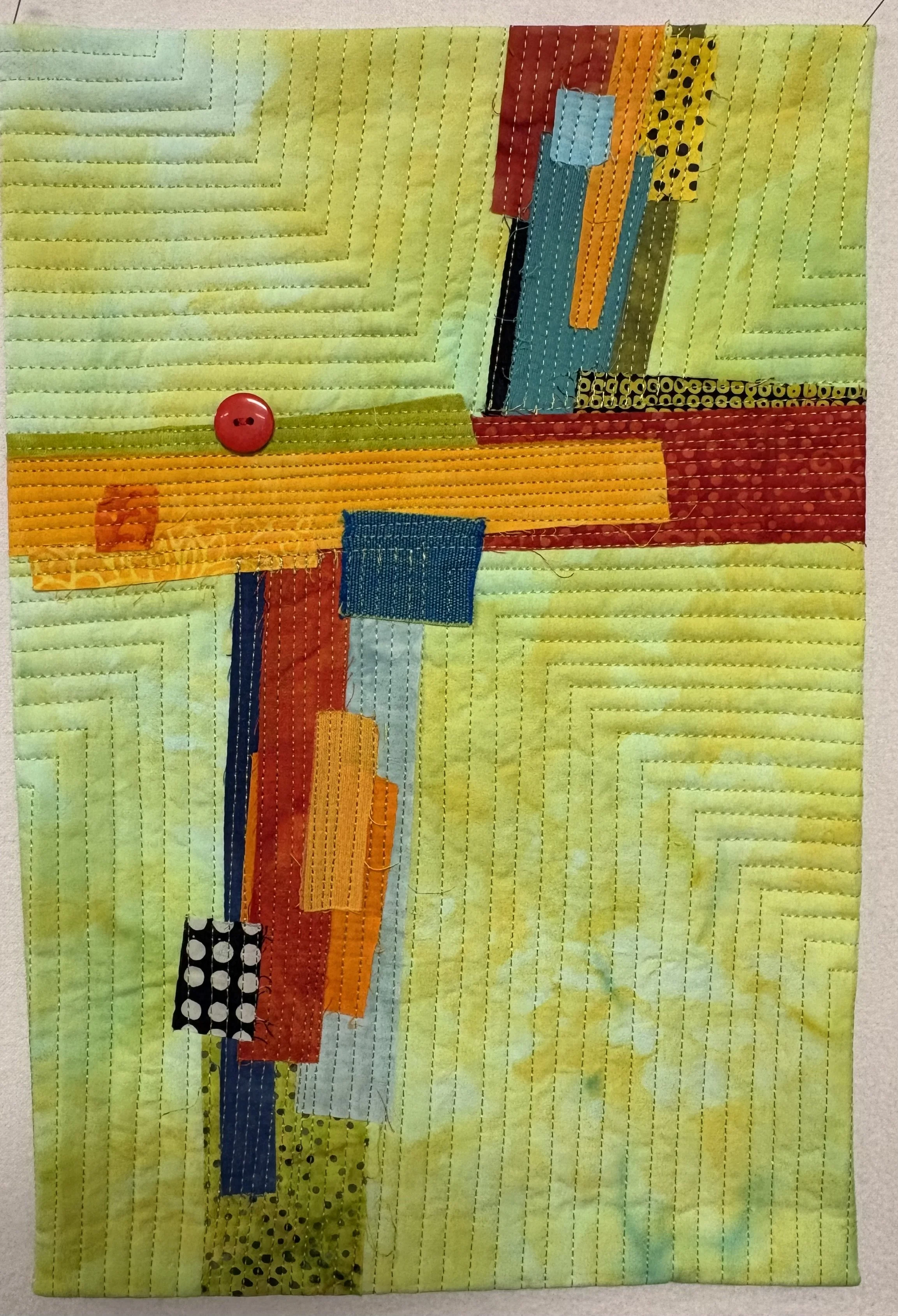
A Practice Piece on my way to mastery.
I have been making things for a long time. I’m not just talking about the crayon drawings or raggedly stitched projects of my youth. I have been deliberately and intentionally learning what I need to know in order to make the things I wish to create for about five decades.
First, I learned to sew. Doll clothes, my clothes, my home decor, functional quilts and more. My skills were earned through decades of dedicated effort in making functional things. When I made the shift to art quilts I was prepared in a way that no other path would have prepared me. When I come across a problem, I know how to use a seam ripper and I know how to figure it out. The only way I would know this is through the years of amassed experience. While I think a three hour or five day workshop can be beneficial, I think it is more beneficial if you have a lot of experience first. Particularly if you have screwed up a bunch of stuff and have had some failure in your creative history.
When I started making art quilts, I told my family that the sewing room was now the art studio. And I called it that. I would say I was going into my studio. It sounded weird and it felt even weirder but I stuck with it and now it’s totally normal.
Even though I have been making art for nearly three decades, I still get the occasional comment from people that I am so “crafty”. This word - the c word - has grated on my nerves ever since I decided I was an artist, not a seamstress. Not because it is necessarily a bad word but, because it produces visions of mass produced cookie cutter projects that don’t have heart and soul in them. Do I like the koozie that keeps my bowl of oatmeal warm that was gifted me? Yes, I do. But do I consider what I do the same thing as that? No. I do not.
Here’s the thing though. I would not be an artist today if I had not learned the craft of sewing. It started there. I have taken it so much further. My art, and your art, stands on the shoulders of craft. You have to learn the properties of your materials. Figure out what they can and cannot do. Practice and reiterate your practice. Push your skills and gather some failures. Master your craft. Only then can your art stand on the shoulders of your craftsmanship. In fact, without mastery of your materials, skills and repeated effort, I don’t think art is possible.
If you are ever in the position where someone calls your art crafty, be prepared with your response. For me, I simply say - Sewing is a craft, what I attempt to do is raise it to an art form.
Without the experience of mastering my craft, I would not be an artist. What is it that you want to be? What do you need to master? Commit to it and it will take you further than you can imagine when you first begin.

Practice at mastering the limited color palette